
Indoor Plants
Winter Houseplant Care: Why Your Plants Struggle in January
Low light, dry air, and cold drafts stress houseplants every winter. Here's how to keep yours thriving through January and beyond.
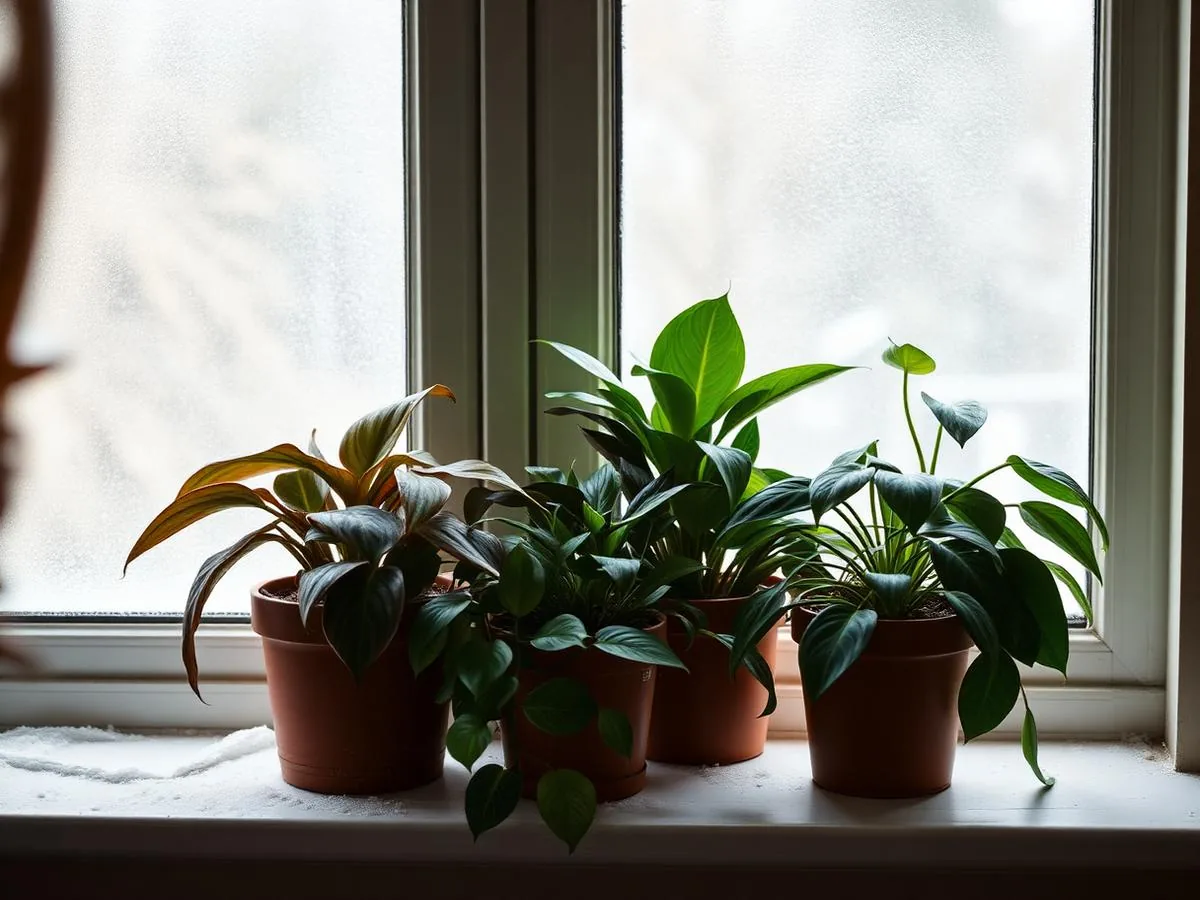
Why houseplants struggle so much in January
By the time January rolls around, most houseplants are dealing with a stack of stressors at once: shorter days, weaker light, dry indoor air from furnaces, and cold drafts near windows and doors. Any one of these alone is manageable, but together they push many plants into decline.
In our experience, the most common January complaint is yellowing lower leaves and slowed growth. Most of the time this isn't disease, it's simply a plant adjusting to a season with far less usable light and much lower humidity than it had in summer.
Understanding what's actually changing indoors during winter, and adjusting your care routine to match, is the difference between plants that merely survive until spring and plants that keep looking good the whole way through.
The light problem
Daylight hours shrink significantly in winter, and the sun sits at a lower angle, so even a south-facing window delivers noticeably less usable light than it did in July. Many plants that thrived on an east windowsill in summer start stretching and thinning out by midwinter.
Signs your plant isn't getting enough light
Watch for long, leggy stems reaching toward the window, smaller new leaves than the plant produced in summer, and pale or washed-out coloring. Variegated plants often lose their patterning and revert to solid green when light drops too low.
Fixing low light without breaking the bank
Moving plants closer to your brightest window is the simplest fix and costs nothing. South- and west-facing windows offer the most usable light in winter, even though the intensity is lower than summer sun.
A basic grow light is a worthwhile investment for plants that can't get enough natural light. A simple LED grow light run for 10 to 12 hours a day can noticeably improve growth on plants stuck in dim corners or north-facing rooms.
| Light type | Approx. cost | Daily runtime | Best for |
|---|---|---|---|
| Clip-on LED | $15-$30 | 10-12 hrs | Single small plants |
| Full-spectrum bulb | $10-$20 | 10-12 hrs | Existing lamp fixtures |
| LED grow light bar | $40-$80 | 10-14 hrs | Plant shelves, multiple pots |
The humidity problem
Indoor humidity often drops below 30% in winter once heating systems kick on, compared to 40-50% or higher during warmer months. Many popular houseplants, including ferns, calatheas, and tropical foliage plants, come from environments with 60% humidity or more.
Crispy brown leaf edges and tips are the classic symptom of low humidity stress, and they're often mistaken for underwatering, which leads to overcorrecting with more water than the plant actually needs.
- Group plants together to create a shared humid microclimate
- Set pots on a pebble tray filled with water below the pot base
- Run a small humidifier near sensitive plants
- Mist occasionally, but don't rely on it as a primary fix
- Move humidity-loving plants out of bathrooms with poor ventilation
Watering less in winter
Slower growth and lower light mean most houseplants use far less water in winter than they do in summer. Watering on the same schedule year-round is one of the most common ways houseplants get overwatered and develop root rot during the colder months.
- 1
Check the soil before watering
Stick a finger about two inches into the soil. If it's still moist, wait a few more days before watering again.
- 2
Water less frequently but thoroughly
When you do water, water deeply until it drains from the bottom, then let the pot dry down further than you would in summer.
- 3
Skip fertilizer for most of winter
Most houseplants aren't actively growing enough to use fertilizer well; resume feeding once you see new growth in spring.
- 4
Empty saucers after watering
Standing water in a saucer during cooler months increases the risk of root rot since soil dries much more slowly.
Protecting plants from cold drafts
Windowsills that feel pleasantly bright can also be surprisingly cold at night, especially with older or single-pane windows. Leaves touching cold glass can suffer localized damage that shows up as dark, water-soaked patches.
Keep plants a few inches away from window glass and clear of heating vents and radiators, which dry out foliage and stress roots with sudden temperature swings. Doorways that open to the outside frequently are another spot to avoid during winter.
Common winter houseplant mistakes
The biggest mistake we see is treating winter care as identical to summer care. Plants need less water, no fertilizer for most of the season, and often benefit from being moved to a brighter spot temporarily.
A close second is panicking over normal winter leaf drop. Many plants, including ficus and some palms, shed a few lower leaves as a natural response to lower light and will recover once days lengthen in spring.
- Reduce watering frequency, not necessarily the amount per watering
- Pause fertilizer until spring growth resumes
- Keep leaves away from cold window glass and heating vents
- Boost humidity for tropical foliage plants
- Supplement light for plants in dim rooms
When to repot and prune
Winter is generally not the time to repot, since plants are in a slower growth phase and disturbed roots take longer to recover. Wait until early spring when you see new growth starting before moving a plant into a larger pot.
Light pruning of dead or damaged leaves is fine year-round and actually helps redirect the plant's limited winter energy toward healthy growth rather than maintaining struggling foliage.
The bottom line
Most winter houseplant problems trace back to three things: not enough light, air that's too dry, and watering on a summer schedule. Adjust those three factors and most common houseplants will coast through January without much trouble.
Keep an eye out for new growth as days lengthen in late winter. That's your cue to gradually return to a normal watering and feeding routine as your plants wake back up for spring.
Keep reading
Sources
- #houseplants
- #winter
- #indoor plants
- #humidity
Frequently Asked Questions
Why are my houseplant's leaves turning yellow in winter?
Yellowing lower leaves in winter are often a normal response to lower light and slower growth rather than a sign of disease. Check that you're not overwatering, since cold soil combined with excess moisture is a leading cause of winter yellowing and root stress.
Should I fertilize houseplants in winter?
Most houseplants aren't actively growing enough in winter to make good use of fertilizer, so it's best to pause feeding until you see new growth in early spring. Fertilizing dormant plants can actually cause salt buildup and root damage.
How can I raise humidity for my houseplants without a humidifier?
Grouping plants together, setting pots on a pebble tray with water, and avoiding placement near heating vents all help raise local humidity. A small humidifier is more effective for consistently humidity-loving plants like ferns and calatheas.
Is it normal for houseplants to grow slower in winter?
Yes, most houseplants naturally slow down in winter due to shorter days and lower light intensity, even indoors. This is a normal seasonal rhythm, and growth typically picks back up as daylight increases in spring.
How often should I water houseplants in winter?
Most houseplants need watering less often in winter since they're using less water with reduced light and growth. Check soil moisture with a finger before watering rather than sticking to a fixed weekly schedule.
Can I use a grow light to help plants through winter?
Yes, a basic LED grow light run for 10 to 12 hours a day can significantly help plants that aren't getting enough natural winter light. This is especially useful for plants in north-facing rooms or offices with limited windows.
Why do my plant's leaf tips turn brown in winter?
Brown, crispy leaf tips are most often caused by low indoor humidity from winter heating rather than underwatering. Boosting humidity through grouping, pebble trays, or a humidifier usually resolves the issue over a few weeks.
Related Articles
Vegetable Garden Failures: How to Fix Common Problems
Discover how to diagnose and resolve common vegetable garden challenges using practical, science-based troubleshooting techniques to save your plants.
High Yield Vegetable Gardening: Advanced Methods for Success
Take your harvest to the next level by implementing intensive planting strategies, precision nutrient management, and data-driven garden planning techniques.

Automated Garden Tools for Beginners: A Complete Guide
Learn how to use smart technology to streamline your gardening chores without losing the joy of working in the soil. This guide covers the basics of garden automation for beginners.