
Lawn Care
The Fall Lawn Care Schedule That Sets Up a Perfect Spring
A week-by-week fall lawn plan covering aeration, overseeding, fertilizing, and mowing so your grass comes back thick and green next spring.
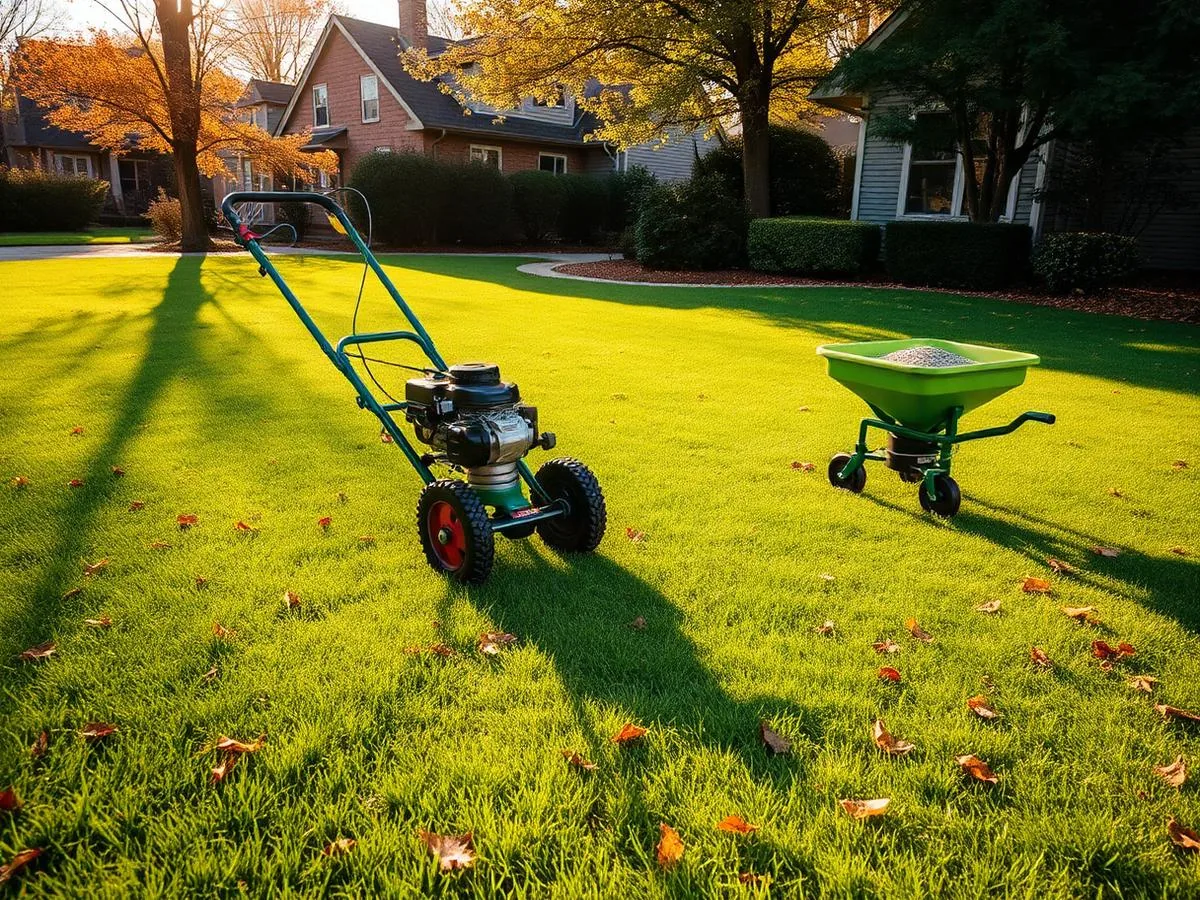
Why fall is the most important season for lawn care
Most homeowners pour their lawn care effort into spring, but fall is when the real payoff happens. Cool-season grasses like Kentucky bluegrass, fescue, and perennial ryegrass shift into root-building mode as temperatures drop, which means fall treatments have an outsized effect on how thick and resilient your lawn is next year.
Soil temperatures in fall stay warm enough for seed germination and root growth while air temperatures cool enough to reduce weed competition and disease pressure. In our testing, lawns overseeded in early fall filled in noticeably denser by spring than those overseeded in late spring under summer stress.
This guide walks through a practical schedule from late summer through the first hard frost, covering mowing adjustments, aeration, overseeding, fertilizing, and cleanup, so you're not guessing at timing.
Late summer to early fall: aeration
Start with aeration 4-6 weeks before your average first frost date, typically early-to-mid September in much of the northern U.S. Aeration relieves soil compaction and creates channels for water, air, and nutrients to reach grass roots, which matters most right before overseeding.
Core aerators, which pull small plugs of soil out of the lawn, work better than spike aerators, which just poke holes and can actually increase compaction around the hole. You can rent a core aerator for $60-90 a day or hire a lawn service for $75-200 depending on yard size.
Overseeding for a thicker lawn
Overseeding right after aeration is one of the highest-value things you can do for a thin or patchy lawn. The holes left by aeration give grass seed direct soil contact, which dramatically improves germination rates compared to seeding over undisturbed turf.
- 1
Choose the right seed blend
Match seed to your existing grass type and sun exposure; a tall fescue blend suits most transition-zone lawns, while a fine fescue mix handles shade better.
- 2
Aerate first
Complete core aeration before spreading seed so it falls into open holes rather than sitting on the thatch layer.
- 3
Spread seed evenly
Use a broadcast or drop spreader at the rate listed on the seed bag, typically 4-8 lbs per 1,000 square feet for overseeding.
- 4
Add a thin topdressing
A light layer of compost or topsoil, about a quarter inch, improves seed-to-soil contact without smothering the seed.
- 5
Water consistently
Keep the top inch of soil moist with light daily watering for 2-3 weeks until seedlings are established, then taper to deeper, less frequent watering.
Fertilizing on the right schedule
Fall fertilizer applications matter more than spring ones for cool-season lawns because the grass is directing energy into root and rhizome growth rather than leaf growth. A nitrogen-heavy application too early in fall just pushes leaf growth at the expense of roots.
| Timing | Application | Purpose |
|---|---|---|
| Early fall (Sept) | Balanced fertilizer, moderate nitrogen | Support recovery after summer stress and fuel overseeding |
| Mid fall (Oct) | Higher phosphorus if soil test shows need | Encourage root development before winter |
| Late fall (Nov, before frost) | Winterizer, higher potassium and nitrogen | Build carbohydrate reserves for winter survival and early spring green-up |
Always base exact rates on a current soil test rather than guessing. Most state extension offices offer soil testing for $10-20, and the results tell you precisely which nutrients your lawn actually needs instead of applying a generic blend.
Mowing height adjustments through fall
Keep mowing at your normal height, typically 2.5-3.5 inches for most cool-season grasses, through most of fall. Taller grass shades out weeds and helps roots stay cool, so resist the urge to scalp the lawn as the season winds down.
For your final mow or two before winter dormancy, gradually lower the height to about 2 inches. Grass left too tall over winter is more prone to matting under snow, which invites fungal disease like snow mold in the spring.
- Keep mower blades sharp; dull blades tear grass and stress the lawn
- Never remove more than one-third of the blade length in a single mow
- Mulch mow fallen leaves in thin layers rather than bagging them
- Reduce mowing height gradually over the last 2-3 cuts of the season
Weed control and cleanup
Fall is the best time to tackle perennial broadleaf weeds like dandelion and clover with a post-emergent herbicide, because the plants are actively pulling nutrients into their roots for winter and will carry the herbicide down with them, giving better long-term control than a spring application.
Leaf litter left in thick layers blocks sunlight and traps moisture against grass blades, which can lead to dead patches and fungal issues by spring. Mow over light leaf coverage to mulch it in place, and rake or blow thicker piles before they mat down.
- Remove or mulch fallen leaves weekly during peak drop
- Spot-treat perennial weeds before the first hard frost
- Clean and sharpen mower blades before winter storage
- Drain and store hoses and irrigation lines before freezing temps
- Mark sprinkler heads and edging to avoid winter damage
Common fall lawn care mistakes
The biggest mistake is stopping mowing and lawn care too early just because temperatures drop. Grass continues growing, and roots keep developing, well into fall in most regions, so pulling maintenance in early October often leaves a lawn under-prepared for winter.
Another frequent error is skipping aeration because the lawn 'looks fine.' Compaction builds up invisibly over years of foot traffic and mowing, and by the time thinning is visible, the lawn has already lost significant root capacity.
The bottom line
A consistent fall routine of aeration, overseeding, smart fertilizing, and steady mowing does more for lawn health than almost anything you can do in spring. The grass uses this cooler window to rebuild roots and store energy, and that groundwork shows up as a thicker, greener lawn the moment spring temperatures return.
Work backward from your area's first frost date, tackle aeration and overseeding early, and taper mowing height and fertilizing as winter approaches. Do that consistently for one or two seasons and most lawns need noticeably less spring rescue work.
Keep reading
Sources
- #lawn
- #fall
- #seeding
- #aeration
Frequently Asked Questions
When exactly should I start fall lawn care?
Begin aeration and overseeding 4-6 weeks before your area's average first frost date, which falls in early-to-mid September for much of the northern U.S. and later, into October, in milder southern and coastal regions. Starting too late reduces the time grass has to establish roots before winter.
Is fall or spring better for overseeding a lawn?
Fall is generally better for cool-season grasses. Warm soil combined with cooler air reduces weed competition and disease pressure, letting new grass establish stronger roots than spring seeding, which often faces summer heat stress shortly after germination.
How often should I aerate my lawn?
Most lawns benefit from aeration once a year in fall, though heavily used lawns with clay soil may need it twice a year, in spring and fall. Sandy soil lawns with light foot traffic can often go two to three years between aerations.
Should I bag or mulch leaves in fall?
Mulching thin leaf layers directly into the lawn with a mulching mower returns nutrients to the soil and saves time. Thick leaf piles should be raked, blown, or bagged instead, since heavy coverage blocks light and traps moisture against the grass.
What fertilizer ratio is best for fall lawns?
It depends on your soil test results, but a general pattern is moderate nitrogen in early fall to support recovery, added phosphorus if needed for root growth in mid fall, and a potassium-rich winterizer blend for the final application before frost.
Can I still mow my lawn in late fall?
Yes, continue mowing as long as the grass is actively growing, gradually lowering the height to around 2 inches for your last cut or two of the season. Stopping too early leaves grass too tall, which increases the risk of matting and snow mold over winter.
Do I need to water my lawn in fall?
Yes, especially after overseeding, when the top inch of soil should stay consistently moist for 2-3 weeks. Established grass also benefits from about 1 inch of water per week until the ground begins to freeze, supporting continued root development.
Related Articles
Vegetable Garden Failures: How to Fix Common Problems
Discover how to diagnose and resolve common vegetable garden challenges using practical, science-based troubleshooting techniques to save your plants.
High Yield Vegetable Gardening: Advanced Methods for Success
Take your harvest to the next level by implementing intensive planting strategies, precision nutrient management, and data-driven garden planning techniques.

Automated Garden Tools for Beginners: A Complete Guide
Learn how to use smart technology to streamline your gardening chores without losing the joy of working in the soil. This guide covers the basics of garden automation for beginners.