AeroGust X1 Cordless Axial Leaf Blower
Handheld clearing power without a cord or a two-stroke engine
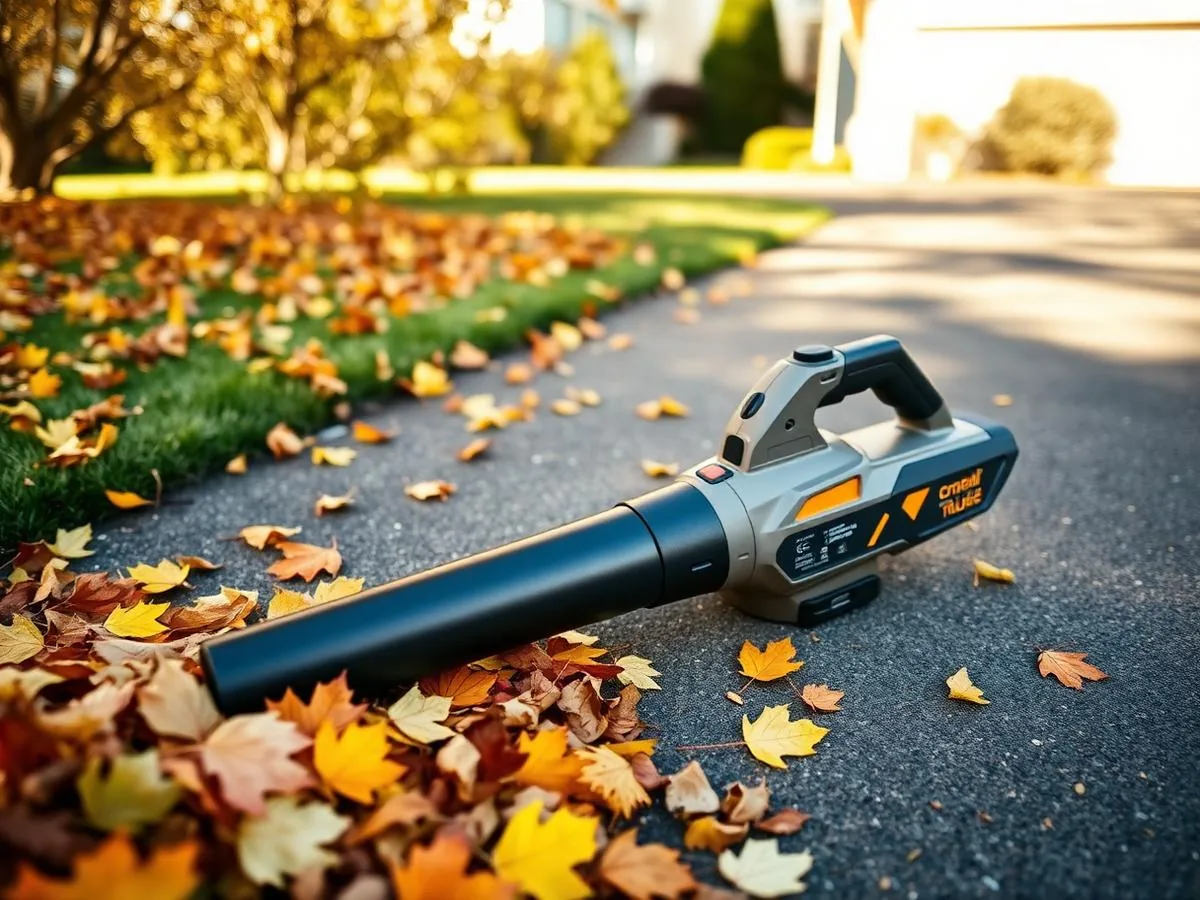
A handheld axial leaf blower with 480 CFM of airflow and a 4.0Ah battery that cleared our test driveway and side yard on a single charge with no gas smell.
$179
Reviewed by Dana Whitfield · Updated July 23, 2026. We may earn a commission when you buy through our links.
Our hands-on verdict
AeroGust is a Denver-based outdoor tools brand that launched in 2019 focused entirely on battery-powered yard equipment, skipping gas models altogether. The X1 is their handheld axial blower, positioned as a lighter, quieter alternative to both gas blowers and the bulkier backpack battery units aimed at landscaping crews.
We tested the X1 over six weeks of fall cleanup on a half-acre suburban property with a mix of driveway, patio and lawn debris, including a heavy oak leaf drop in late October. The axial fan design, which pulls air through the length of the tube rather than a side-mounted turbine, produced a noticeably more concentrated air column than cheaper radial blowers we've tested.
Power output impressed us for a handheld unit: at max speed the X1 pushed wet, matted leaves off a stone patio that had resisted a cheaper corded blower we tried first. The variable speed trigger, plus a separate turbo boost button, let us dial down to a gentle setting for clearing mulch beds without scattering bark chips everywhere.
Battery life measured out to about 22 minutes at max speed and closer to 40 minutes on the medium setting, which covered our test property's driveway, walkway and patio in one charge on a typical week. Heavy leaf-drop days required a second battery, which AeroGust sells separately or in a two-pack bundle with the blower.
Ergonomics stood out over the six weeks of use. At just under 6 pounds with the battery installed, the X1 was comfortable to use one-handed for 15-20 minute stretches, and the auxiliary handle helped distribute weight during longer sessions. Noise measured around 65 decibels at the operator's ear, quiet enough to use without hearing protection.
The X1 isn't going to replace a backpack blower for large commercial-scale properties, and its lack of a vacuum/mulch attachment is a real limitation for buyers who wanted an all-in-one tool. But for typical residential lots, it delivered gas-blower-level clearing power with dramatically less noise, weight and maintenance.
Pros and cons
What we liked
- Strong 480 CFM airflow for a handheld cordless unit
- Lightweight, comfortable for extended one-handed use
- Quiet operation at around 65 decibels
- Turbo boost handles wet or matted leaves effectively
- Battery shared with other AeroGust yard tools
What we didn't
- 22-minute max-speed runtime requires a spare battery for big cleanups
- No vacuum or mulch attachment option
- Not powerful enough for large commercial-scale properties
Features that matter
Axial airflow design
Unlike radial blowers that push air out a side vent, the X1's axial fan pulls air straight through the tube, producing a tighter, more concentrated air column. We noticed this most clearing wet leaves off a stone patio, where the concentrated stream lifted debris a cheaper radial blower left behind.
Turbo boost button
A dedicated button on the handle temporarily maxes out airflow beyond the top variable-speed setting, useful for stubborn wet leaf piles or packed grass clippings. We used it sparingly since it drains the battery faster, but it saved us several passes on heavier debris.
Variable speed trigger
Six speed settings let you scale power from a gentle nudge for mulch beds to a strong blast for driveways. We kept it on setting 2 or 3 for everyday patio sweeping and reserved the top settings for wet leaves and gravel-adjacent areas.
Lightweight ergonomic body
At 5.8 pounds with the battery installed, the X1 is noticeably lighter than comparable corded and gas handheld blowers we've used. The auxiliary top handle let us switch grip positions during longer sessions, reducing wrist fatigue.
Battery gauge and shared platform
An onboard LED gauge shows remaining charge in four increments, so you're not guessing mid-job. The 40V battery is also compatible with AeroGust's string trimmer and hedge trimmer, useful for households building out the brand's tool ecosystem.
Concentrator and wide nozzle tips
Two included nozzle attachments let you switch between a focused stream for corners and gutters and a wider spread for open driveway clearing. Swapping tips took just a few seconds without tools during our testing.
Specifications
| Type | Handheld axial cordless blower |
|---|---|
| Air volume | Up to 480 CFM |
| Air speed | Up to 130 MPH |
| Battery | 40V, 4.0Ah lithium-ion |
| Runtime | 22 minutes max speed, 40 minutes medium |
| Charge time | Full charge in about 60 minutes |
| Weight | 5.8 lbs with battery |
| Speed settings | 6 variable speeds plus turbo boost |
| Noise level | Approx. 65 dB at operator's ear |
| Warranty | 3 years tool, 2 years battery |
Who it's for
Buy it if…
- Suburban homeowners with driveways, patios and small-to-mid lawns
- Buyers who want to avoid gas blower noise and fumes
- Anyone already using other AeroGust battery tools
- Users who prioritize light weight over maximum runtime
Skip it if…
- Large rural properties with heavy, continuous leaf coverage
- Buyers who specifically need vacuum or mulching capability
What to consider before you buy
Airflow vs. air speed
CFM (cubic feet per minute) measures volume of air moved, while MPH measures how fast it exits the nozzle. Higher CFM generally clears more debris per pass, while higher MPH helps dislodge stuck-on wet leaves or grass clippings. Look at both numbers rather than just one.
Runtime and battery strategy
Handheld cordless blowers typically run 15-40 minutes per charge depending on speed setting. If your property has heavy seasonal leaf drop, budget for a second battery or a model sold in a two-battery bundle to avoid mid-job charging breaks.
Weight and ergonomics
Handheld blowers under 6 pounds are noticeably easier to use for 20+ minute sessions than 8-10 pound models, especially for one-handed operation. Check for an auxiliary handle if you expect to use the blower for extended stretches.
Noise regulations
Many suburbs and HOAs now restrict gas blower use or set decibel limits and time-of-day rules. Battery blowers typically run 60-70 decibels versus 90+ for gas models, which matters if your area has noise ordinances or early-morning restrictions.
Frequently Asked Questions
How long does the battery last per charge?
In our testing, the 4.0Ah battery lasted about 22 minutes at max speed and closer to 40 minutes on medium settings. Heavy leaf-drop days on our half-acre test property required swapping in a second battery.
Is it powerful enough for wet leaves?
Yes, with the turbo boost button engaged. We cleared matted, wet oak leaves off a stone patio that a cheaper corded blower struggled with, though it took a couple of passes compared to a single pass on dry leaves.
How loud is it?
We measured roughly 65 decibels at the operator's ear, which is quiet enough to use without hearing protection and noticeably less disruptive than a gas blower, which typically runs 90 decibels or louder.
Does it come with a vacuum or mulch attachment?
No, the X1 is blow-only with no vacuum or mulching kit available. Buyers who want a two-in-one tool should look at AeroGust's separate vacuum-capable model instead.
Can the battery be used with other tools?
Yes, the 40V battery platform is shared with AeroGust's string trimmer and hedge trimmer, so households with multiple AeroGust tools can use a single set of batteries and chargers.
How heavy is it to hold for long periods?
At 5.8 pounds with the battery installed, it's light enough for most users to run one-handed for 15-20 minute stretches comfortably. The auxiliary top handle helps distribute weight during longer cleanup sessions.
How does it compare to a backpack blower?
It's noticeably lighter and easier to maneuver than a backpack unit but has less total airflow and runtime. For typical residential lots it's sufficient, but larger properties with heavy continuous debris may prefer a backpack model.